
Key Takeaways
- The right interval depends on your training load, whether you are managing an injury, and how long the benefit of your last session actually held.
- Published guidance ranges from twice a week to once a quarter, which is exactly why a single number is misleading.
- People training moderately or managing everyday desk tension often do well somewhere between every three and every eight weeks.
- Your own experience is the most reliable guide. Track how long the benefit lasts and use that as your starting interval.
Most people asking this question have already had one good massage. Something loosened, moving felt easier for a while, and then the old tightness crept back. The real question underneath is not how often in general. It is how often for me.
Published guidance is unhelpfully wide. Recommendations range from twice a week to once a quarter depending on which source you read.
Healthline cites a 2014 study in which a 60-minute massage two or three times a week showed more benefit for neck pain than the same massage once a week. It is an older study on one complaint, so it is a data point rather than a rule. Other practitioners suggest every six weeks. Both can be right, because they are answering for different people.
At True Balance Pain Relief, we assess movement, gait and posture before we treat, which means we are looking for what is driving the pain rather than only where it hurts. That assessment is also what tells us how often someone genuinely needs to come back, and for many people the honest answer is less often than they expect.
If you are trying to work out the right interval for your own body, contact us and we can talk through your training and your symptoms before you commit to anything.
Here is what changes the number.
What does sports massage frequency actually depend on?

Frequency is not a property of massage. It is a property of the person receiving it.
Three things move the number more than anything else. The first is what you are asking your body to do between sessions. Someone in a heavy marathon build is accumulating load every week, so the tissue changes faster and the interval shortens. Someone who trains twice a week and sits the rest of the time is accumulating a different kind of load, more postural than mechanical, and it builds more slowly.
The second is whether you are managing an active problem or maintaining a body that feels broadly fine. Those are different jobs. Maintenance can hold at a comfortable interval for months. Working through a specific restriction usually needs sessions closer together at the start, then spaced out as things improve.
The third is the one people skip: how long the last session actually held. That is real data about your own body, and it is more useful than any published average. If you felt loose for ten days and then tightened up, your current interval is roughly ten days to two weeks. If you felt good for a month, you do not need to come in every fortnight.
One thing frequency cannot fix is a cause that is still active. If your shoulder tightens because of how your workstation is set up, more frequent sessions will manage the symptom without touching the reason. That is the situation where our pain relief services in Aurora focus on the underlying pattern instead of booking you in more often.
How often should you book based on your training load?
Training load is the most reliable starting point, so it is worth being specific.
Active training blocks and competition weeks
If you are in a build phase or have events on the calendar, tissue demand is at its highest and the useful interval is at its shortest. Practitioners writing on this commonly put athletes in heavy training somewhere in the range of one to two weeks between sessions, with some competitive athletes going more often under a coach’s guidance.
Timing around an event matters as much as frequency. Deep work close to a race can leave you sore on the day, which is the opposite of what you want. Lighter, shorter sessions sit better in the days immediately before competition, with heavier work scheduled further out.
General maintenance and everyday tension
If you are training moderately or mostly dealing with desk-related tightness, the interval stretches considerably. Published maintenance guidance commonly lands somewhere between every three and every eight weeks, and plenty of people do well at monthly. These are general practitioner ranges, not a clinical standard.
This is where honesty matters. Coming in weekly when a month would serve you just as well is spending money on a schedule rather than a result. We would rather tell you that than fill a calendar.
Recovery from a specific injury
Recovery work typically starts closer together and then spaces out as function returns. Published guidance often puts early sessions around a week apart while things are changing quickly, then moves them outward as the tissue tolerates more and holds its gains longer.
The pattern to watch is progress between visits. If each session starts from a slightly better baseline than the last, the plan is working and the interval can widen. If every session starts from the same place, something outside the treatment room needs to change. Our sports injury recovery work is built around that question rather than around a fixed number of visits.
What happens when sessions are too close together or too far apart?
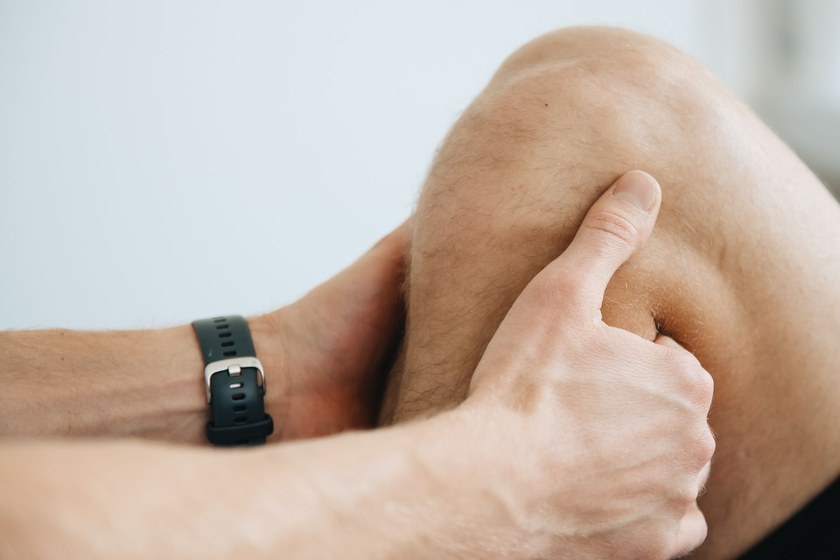
Both ends of the range have a cost, and they are different costs.
Sessions too close together can leave you working from a body that has not finished recovering from the last one. Deep tissue work creates a mild stress response, and that is part of how it helps, but it needs time to settle. Some practitioners suggest allowing at least five to seven days between deeper sessions unless a therapist advises otherwise.
Sessions too far apart carry the opposite cost. Whatever gains you make gradually reverse, and each appointment becomes a reset rather than a step forward. If every visit feels like starting over, the interval has drifted past what your body can hold.
The practical test is simple. Track how you feel at day seven, day fourteen and day thirty after a session. The point at which the benefit clearly fades is your interval. That is your body’s answer, and it beats a number from an article.
How do you build a schedule that fits your goals and budget?
Most people cannot book unlimited sessions, so the real skill is spending a fixed budget well.
Session length versus session frequency
When the budget is fixed, you are choosing between fewer long sessions and more short ones. Broad, whole-body tightness usually favours longer sessions with more time to work. A single stubborn area often responds better to shorter, more frequent work focused on one region.
Neither is automatically better. It depends on whether your problem is distributed or localised, which is one of the things an assessment is for.
Cost, cadence and what to prioritise
A cadence you can sustain for six months will do more than an intensive month you abandon. Better to hold a monthly appointment reliably than to book weekly, stop after three, and return a year later at square one.
If money is the constraint, front-load. Sessions closer together at the start while you are making the fastest change, then widen the interval once things stabilise, generally gets more out of the same total spend than spreading everything evenly from day one.
Tracking what actually changes between sessions
Keep a short note after each session: what eased, how long it lasted, what came back first. Three or four entries will tell you your own interval more accurately than any general recommendation.
That note is also genuinely useful to us. It turns a vague “it helped for a bit” into information we can plan around, and it is often what tells us to space you out rather than book you in. If you want to talk through what a realistic cadence looks like, our sports massage in Denver and Aurora work always starts with that conversation.
Where Aurora Athletes and Desk Workers Should Start
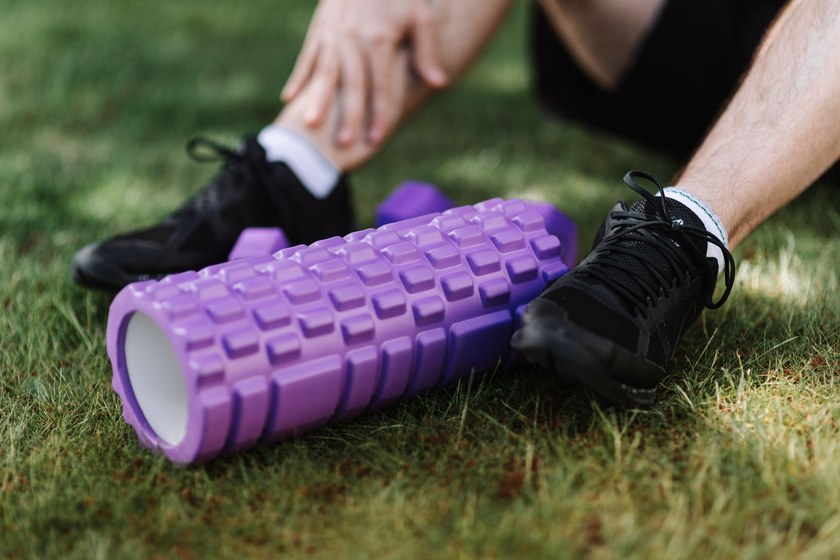
The wide range in published advice is not a sign that nobody knows. It is a sign that the answer is genuinely individual, and that anyone giving you a single number without knowing your training, your history and your symptoms is guessing.
The way out of the guesswork is to stop treating frequency as the first question. Get assessed, find out what is actually driving the tightness, and let the interval follow from that. For some people the honest outcome is a session every four to six weeks and some changes to how they sit or train. For others in a heavy block, it is considerably more often for a defined period.
What we will not do is put you on a schedule you do not need. Here at True Balance Pain Relief, our approach is to look for the source of the problem so the relief holds between visits, which usually means fewer appointments rather than more.
If you are ready to work out the right interval for your own body, book a session or call us today at 970-389-9200.
Medical Disclaimer: This content is for general informational purposes only and is not a substitute for medical diagnosis, treatment, or individualized advice from a qualified healthcare provider. Massage therapy is not a replacement for medical care. If you have severe, sudden, or worsening pain, or any numbness, weakness, or tingling, please see a medical provider before booking soft tissue work. Individual responses to massage vary.
Frequently Asked Questions
How often should you get a sports massage in Aurora?
It depends on what you are asking your body to do. Published guidance commonly puts people in an active training block, or working through a specific injury, somewhere in the range of every one to two weeks at the start. People training moderately or managing everyday desk tension often do well somewhere between every three and every eight weeks, and monthly suits a lot of them. The most reliable guide is your own experience: note how long the benefit of your last session lasted, and use that as your starting interval. We would rather assess you and give a number that fits than apply a default.
Is it healthy to get massages regularly?
For most healthy adults, regular massage is generally well tolerated and many people find it helps them manage tension and move more comfortably. It is not risk-free for everyone, though. Certain conditions, including some circulatory problems, skin conditions, recent injuries, and pregnancy, need clearance or an adapted approach first. If you have an ongoing medical condition or take blood thinners, check with your doctor first and tell your therapist either way.
Is 2 massages a week too much?
For most people, twice a week is more than they need on an ongoing basis, though it is not automatically harmful. Some competitive athletes in heavy training work at that frequency under guidance, and some research on specific complaints has looked at higher frequencies over short periods. The concern with sustaining it long term is recovery time between sessions, particularly with deeper work. If you are considering it, have a clear reason and a clear end date rather than treating it as an ongoing cadence.
Can too much massage be bad?
Yes. Sessions stacked too close together, or work that is consistently too deep, can leave you sore, tired, or feeling flat rather than recovered. Deep tissue work creates a mild stress the body needs time to settle, and if the next session arrives before that has happened, you are adding to the load instead of easing it. Persistent post-session soreness that has not cleared before your next appointment is the clearest sign to lengthen the interval or reduce the intensity. Bruising, sharp pain during a session, or symptoms that worsen afterwards should always be raised with your therapist.
How often is it healthy to get a massage?
There is no single healthy frequency, which is why published advice ranges so widely. For general wellbeing and everyday tension, an interval somewhere between every three weeks and every couple of months is a common and sustainable pattern for a lot of people. Higher frequencies are usually tied to a specific goal, such as a training block or injury recovery, and taper once it is met. Health is better judged by how you feel between sessions than by how many you book.
Can massage break up muscle knots?
Not in the literal sense the phrase suggests. The idea that tissue is physically broken apart is not a well established explanation, and it is worth being clear about that rather than repeating it. What is observed is that tender, restricted areas often become less tender and move more freely after focused work, and changes in how the nervous system responds to pressure are likely part of the picture. The result people care about, that the sore spot eases and movement improves, is real. The mechanical explanation attached to it is not.
Do massages reduce cortisol?
The evidence here is more mixed than the popular claim suggests. Cortisol reduction is frequently stated as an established benefit, but the findings are less consistent than that framing implies, and we are not going to assert it as settled. What is reasonable to say is that many people report feeling calmer and less tense after a session, and that subjective relaxation is a genuine outcome. It is simply a different claim from a reliable, measurable hormonal change.
What not to do after a sports massage?
Avoid a hard training session or a heavy lift immediately afterwards, particularly following deeper work, since the tissue has already been given a stimulus and needs time to settle. Skip very hot baths, saunas, and alcohol on the same day if you tend to feel lightheaded, and drink normally rather than forcing large amounts of water. Light movement such as walking or gentle mobility work is generally more useful than either complete rest or intense activity. If you feel sore for a day or two, that is common. Soreness that is severe, or that lasts beyond a few days, is worth mentioning to your therapist before the next session.